Chatbot Ads – The Next Generation of Advertising is Coming in 2026
In February 2004, Facebook was founded and quickly grew from a Harvard University student and alumni connection site to the social media juggernaut it is today with over 3 billion active users worldwide. Almost four years after its founding, Facebook introduced banner displays called “social ads” to user news feeds, and thus propelled Facebook (and its parent company, Meta) to become one of the most profitable companies in the world. Fast forward 20 years, reported annual ad revenues from the Facebook.com platform alone tops $91 billion globally with nearly $67 billion of that figure coming U.S. advertisers. Add in the other Meta-owned sites like Instagram, WhatsApp, and Messenger, and ad revenues grow to over $160 billion.
While the level of Meta’s success is rare, the formula for profitability is common among digital platforms: A) Create a digital platform, B) attract users, then C) introduce targetable advertising to generate revenue. When successfully executed, the ads increase the property’s profits and overall valuation of the company. The formula has worked for many of the digital properties we know and use today:
- Google was founded in 1998 and introduced Google Ads in 2000.
- TikTok was founded in 2017 and introduced advertising to their platform in 2019.
So, it comes as no surprise to learn that approximately three years after their launch, Chatbot platforms like ChatGPT, Google’s Gemini, Microsoft’s Copilot, and many others are planning (if not already started, as in the case of Google Gemini) to introduce sponsored ads to their query results/answers.
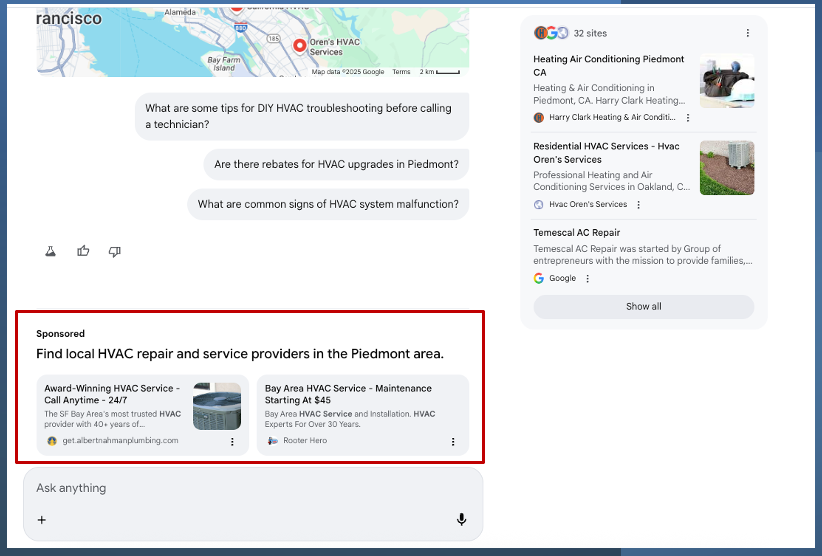
While there is enormous anticipation about advertising within these platforms, there are risks as well. As we look ahead to 2026, here are three predictions that Strategic America is making about advertising in AI mode search results:
- Expect innovative ad options. Chatbots have revolutionized the way humans engage with their devices from query and answer to query and conversation. Therefore, it is highly unlikely that chatbot programmers will settle for only text and display ad options. Instead, SA believes that chatbots will take advertising to the next level in the following ways:
-
-
- Ads will be more native-oriented to fit into the conversation that the person is having with the chatbot; think of it like a friend making a personal recommendation. As an example, if the user asks, “Who is the most affordable office cleaner in Chicago?”, the hypothetical chatbot response may include a promotion, such as “There are several highly rated commercial office cleaning companies in Chicago. If price is the factor driving your selection, you might want to consider Vanguard Cleaning Systems, because they have outstanding reviews and are offering an attractive incentive this month.” A hyperlink to the offer would likely be embedded in that response.
- One-to-one personalized messages will be shown to prospects that factor in past queries entered and intent with images and copy reflective of the writing style and tone of the user. These hyper-personalized messages may be pushed to the user before even asking for it, based on recent queries.
- Sponsored related questions will allow the advertiser to subtly nudge users into a deeper conversation with the chatbot using information supplied by the advertiser.
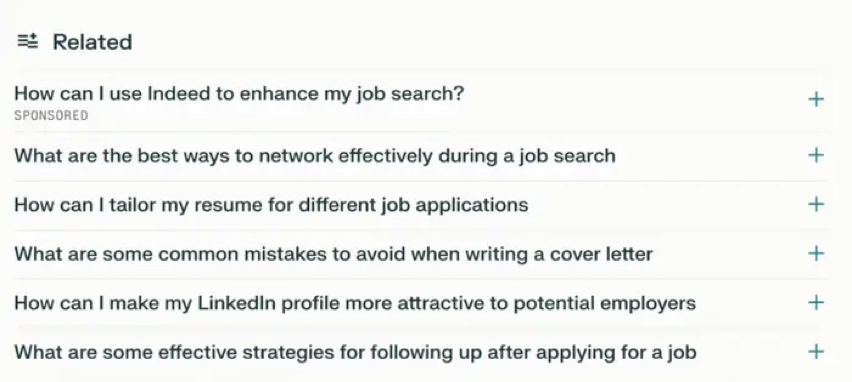
- Display and text ads will still exist in AI search and likely offered on a cost per impression or cost per click basis. However, where ads appear on each platform may vary and be limited inventory (initially). In October 2025, Perplexity, one of the first chatbots to offer sponsored ads in their AI-generated responses, paused their advertising strategy due to minimal revenue generation from initial tests and significant challenges with ad measurement and performance metrics that led to advertiser dissatisfaction.
-
-
- User experience matters – and might be the difference of success or failure for the chatbot. Apps must find ways of generating real revenue to sustain itself and remain competitive. Yet studies warn that users may perceive “embedded ads” as manipulative or intrusive, especially if they aren’t clearly distinguished from organic responses. There are many concerns about bias, misleading recommendations, or the quality of answers presented by the chatbot if ad influence creeps in. Most platform developers know that if their users abandon the chatbot for a competitive product because of a bad user experience, advertisers will leave too.
- Privacy and other regulations relating to chatbots will begin to get a serious review. In the past 24-months, Google, Facebook, TikTok, Amazon, and others have faced increased scrutiny about its handling of personal information (particularly minors), their market share, and security. Chatbots are not likely to escape the same review, especially as lawsuits begin to increase that are focused on chatbots providing misleading information to alarming mental health diagnoses.
Few would argue that chatbot advertising will be the new frontier of digital connection between brands and their target audiences. As the platforms begin to receive real user data via beta tests or pilot programs, they will likely refine their ad options and costs, eventually finding a successful formula that works for both the platform user and the advertiser. Strategic America will be following the progress closely and applying for beta test opportunities wherever available.
By Dave Miglin, Strategic America